Clear Delegation Begins Before the Work Starts
Clear Delegation Begins Before the Work Starts
Many workplace failures begin with an instruction that sounded clear to the person giving it.
A leader explains the task, asks, “Do you understand?” and receives a confident yes. The work later comes back differently from what was expected. Before blaming the employee, the leader should ask: did I explain clearly enough what success would look like?
Define the conditions of satisfaction
Effective delegation requires more than assigning a task and setting a deadline. The person receiving the work needs to understand the conditions of satisfaction, meaning what must be true for the task to be considered successfully completed.
A useful briefing should clarify:
• Why the task matters.
• The outcome required.
• Who is responsible.
• The expected standard.
• The deadline and milestones.
• The authority being delegated.
• The resources available.
• Any limitations or risks.
• How progress should be reported.
• What requires escalation.
These points establish the destination and boundaries. They should not dictate every step unless the work genuinely requires it.
Check what was understood
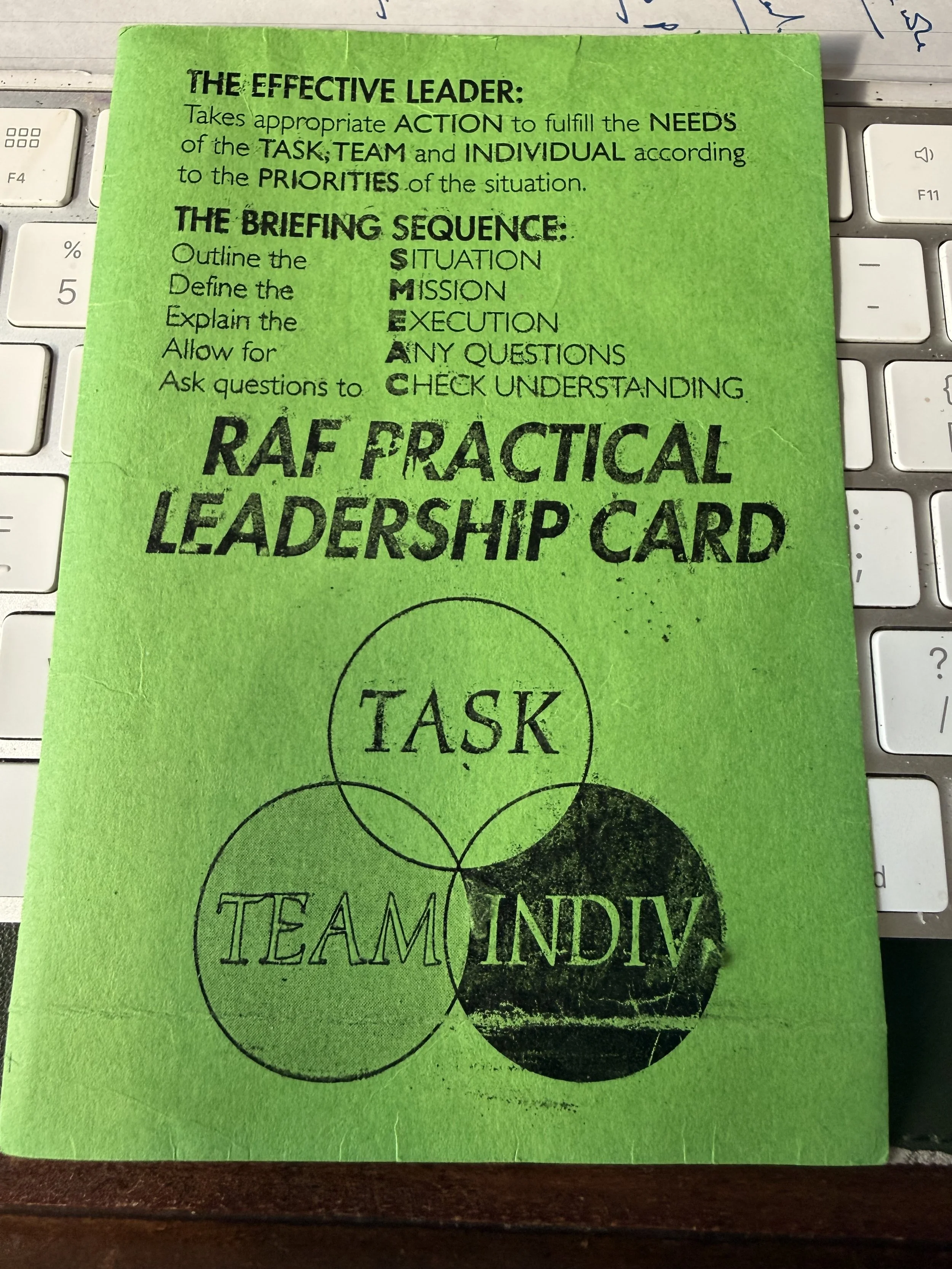
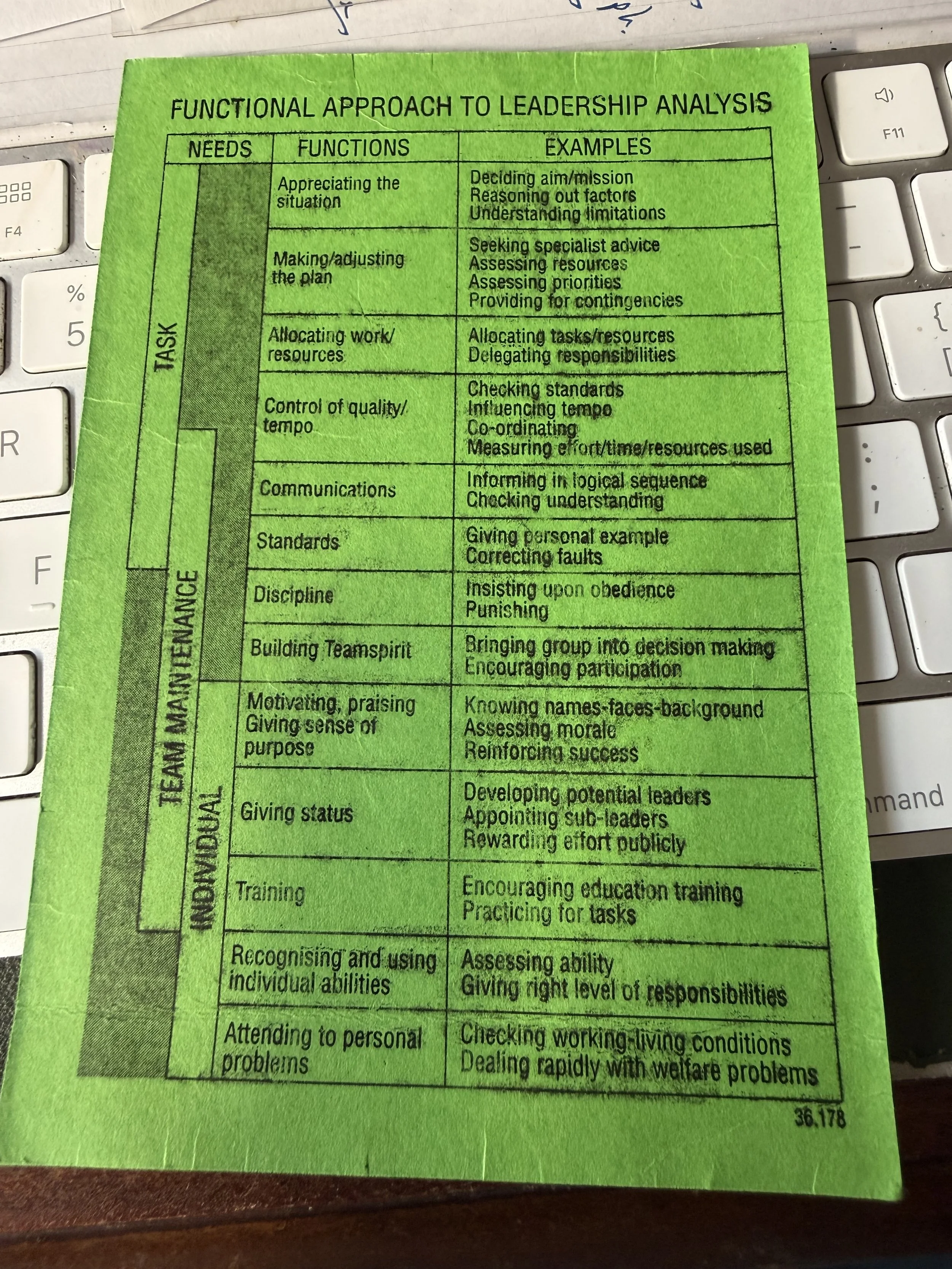
One practical leadership principle I learned through the Royal Air Force was simple: we never assume, we always check.
“Do you understand?” is rarely effective. Most people will say yes, either because they believe they understand or because they do not want to appear difficult.
A better question is:
“Just so I can check that I have explained this clearly, could you talk me through your understanding of what needs to happen?”
This is not a test. It allows both people to identify different interpretations before time, money and energy are wasted.
Balance the task, team and individual
Professor John Adair’s Action-Centered Leadership model describes leadership as balancing three connected responsibilities: accomplishing the task, maintaining the team, and supporting the individual.
A result achieved while damaging trust, morale or capability may carry a long-term cost. Equally, supporting people without maintaining standards and accountability does not serve the individual, the team, or the organization.
Clarity is not micromanagement
Clear delegation establishes the outcome, authority and boundaries. It should then provide appropriate freedom within them.
The leader remains responsible for progress and standards, but should not hover over every decision. People perform best when they know what they own, how success will be judged, and when they should seek support.
If work comes back differently from what you expected, ask two questions:
“Did they misunderstand?”
“Did I explain it clearly enough?”
The second question is often where leadership begins.
Peter Gourri Coaching & Consulting LLC helps executives, lawyers, business owners, and leadership teams improve communication, delegation, accountability, and performance.
Learn more at www.petergourri.com
or arrange a conversation:
https://calendly.com/petergourri-coaching/success
If this article could help another leader or team, please share it.
Transparency statement: I have used AI as a drafting and editing tool to help formulate and prepare this article. The experiences, opinions, thoughts, and ideas are mine, and I take full responsibility for the final words and everything published under my name.